Why Parbery chose a co-CEO model, and how it’s going one year on
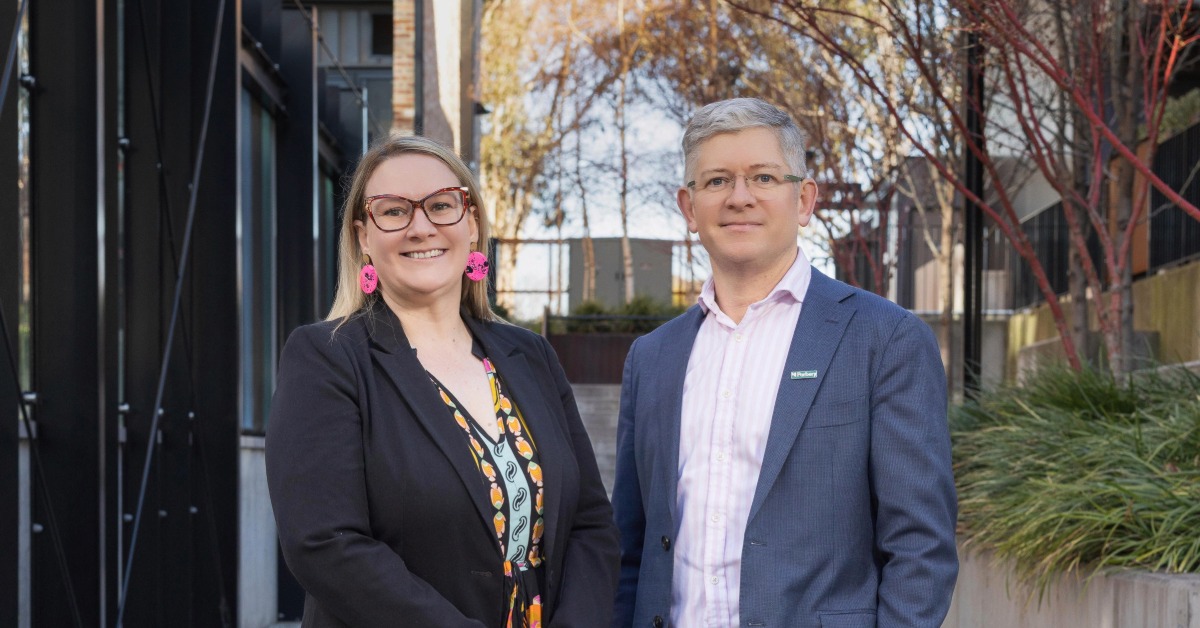
Last year, Parbery founders and owners Kylie Burnett and Nick Chapman moved to a co-CEO model. This shift was in line with the business maturing and Nick and Kylie’s individual career goals – as operations grew more complex, both Nick and Kylie aimed to leverage their complementary skills to guide the company into its next phase of growth.
A year into sharing the co-CEO title, Kylie and Nick reflect on how the model works for them, how responsibilities are shared and divided, as well as key lessons they’ve learned.
What inspired the shift to a co-CEO model?
Kylie: The move to co-CEOs was really formalising what we were already doing, and had been doing since day one when we started the business. It was naming it and assigning clear roles and responsibilities to allow the team to understand it better, and for us to actively manage the parts of the business we are most passionate about and connected to.
It is taking advantage of our strengths, and it gives us an ability to be the sounding board we are for each other in a way that is ingrained within the design of the organisation.
Nick: The change came about with our aspirations for growth. Besides the obvious reason that it’s great having that sense of achievement, to see results after putting your heart and soul into something, growth is also important for the continuity of the business. It provides our staff more opportunities in their careers to learn, develop, and do cool work.
How did you decide on responsibilities shared or divided between the two of you?
Kylie: We looked at it through two lenses – the first was alignment to capability and the things we have an affinity with. For Nick he loves the finances, and for me I am very interested in the HR and employee value proposition elements of managing the business.
We then talked about our career goals, the areas of the market we are interested in growing, and the things that we believe will support the business and our own career growth best. We believe this structure best supports these things.
Nick: We’ve each got some natural strengths. I have a reputation, for better or worse, for loving numbers. Kylie’s very gifted when it comes to the working with people on the HR side of things. The split of responsibilities allows us to work to those very, very well.
What are the pros of a co-CEO model that works for Parbery and our clients?
Kylie: Some of the pros we have experienced are better workload distribution, an ability to focus on agreed key business and capability areas and an ability to support the clients linked to these business and capability areas.
The structure has also allowed us to steer multiple growth and new business initiatives simultaneously. It also gives you someone to bounce decisions off and look at things with a different lens to you.
Nick: We have a few checks and balances with each other’s thinking. Kylie and I do tend to think about things very differently; our brains work differently. We’ll consider a problem using our different thinking styles and come up with the same answer. That’s very reassuring. We temper each other a little bit as well at times, and we only ever get a better outcome because of that.
What are some drawbacks of this model, and how do you plan to address it?
Nick: That’s a hard one to answer because I think Kylie and I have a unicorn relationship that just flows. We speak multiple times throughout the day and have confidence in each other that we’re across things.
I think the other thing that makes it work is we both have a very similar appetite for risk. It isn’t like one of us is going out there and playing fast and loose and to the frustration of the other or vice versa.
We’ve been very careful not to do this, but where it can fall down is not being clear with the organisation about who people need to speak to about certain things. I think that can be a little bit confusing at times. For us it’s very clearly articulating early on, like on the org chart, that we’ve got specific things to be approached about.
Kylie: We were cognisant of the common drawbacks of this model going in, such as conflicting strategies, overlapping roles and potential miscommunication. We have approached this with mitigations in place – our roles and responsibilities are clearly defined, and we communicate extensively every day.
Are there any companies that inspired your thinking on this structure?
Kylie: We did some research around companies that use the co-CEO structure, including Salesforce, Netflix and SAP. We looked at all the lessons they had learnt, and the things that worked. Ultimately, our view was that the way you structure a co-CEO model is so dependent on the two individuals who are being the co-CEOs. We then defined things to ensure clear roles and responsibilities.
Nick: In companies, there is usually a CEO and a COO leadership team, and the dynamic between them is typically the COO is a deputy CEO. In our dynamic, we each do a little of the COO and CEO work, so it makes sense for us to have the titles that we have.
How has it been working for you both over the past year? Any key learnings?
Kylie: Things have been working great. The reality is the structure just solidified what we were already doing and clearly communicated that to staff. The key learnings have simply been to communicate, communicate, communicate, and when you think you are communicating enough, communicate some more.
Nick: In terms of the roles, I think those key learnings are around personal style and personal growth. I regularly engage an executive coach and take stock of what I’ve achieved. I’m looking at my leadership style and just trying to understand how to do that better, how to communicate better, how to lead a little bit better. There’s been a few challenges over the last year, but I can certainly look back on 12 months ago and go, yeah, I’ve improved here and I’ve improved there.
In terms of how the relationship’s working, very happy with it. The dynamic of the relationship is one we’ve had for eight years. It’s not that our relationship needs to change and how we work is going to change. It’s just how it always has been.